- Overview
- What Is Migraine?
- Common Symptoms Associated with Migraine
- What Can Trigger a Migraine Attack?
- When Should Repeated Headaches Be Evaluated?
- When a Headache Needs Emergency Attention
- How a Neurologist Evaluates Headache
- Why Frequent Self-Medication Can Be a Problem
- Managing Migraine and Recurrent Headache
- Neurology and Neuroscience Care at Himalaya Hospital, Patna
- Book a Neurology Consultation in Patna
Migraine and Severe Headache in Patna – When to Consult a Neurologist | Himalaya Hospital
Headaches are common, but repeated or severe headaches can interfere with work, sleep and everyday life. Some headaches may be related to migraine, while others can have different causes and require medical assessment. Himalaya Hospital, Patna provides Neurology and Neuroscience services within its multi-specialty setup, supported by diagnostics, emergency services and critical care when required.
What Is Migraine?
Migraine is a neurological condition that can cause recurring episodes of moderate to severe headache. The pain may be throbbing or pulsating and can sometimes affect one side of the head. Some people also experience nausea, vomiting, sensitivity to light or sound, or visual and sensory symptoms before or during an attack.
Migraine patterns vary considerably between patients. A proper medical history helps a doctor distinguish migraine from other types of headache and decide whether further evaluation is needed.
Common Symptoms Associated with Migraine
Symptoms may include:
- Recurring moderate to severe headache
- Throbbing or pulsating head pain
- Sensitivity to bright light or loud sounds
- Nausea or vomiting during a headache episode
- Headache that worsens with routine physical activity
- Visual disturbances, tingling or other aura-like symptoms in some patients
- Difficulty concentrating or significant tiredness during or after an episode
What Can Trigger a Migraine Attack?
Triggers are not identical for everyone. Some patients notice headaches after changes in sleep, missed meals, dehydration, stress, prolonged screen exposure, certain foods, strong smells or hormonal changes. Keeping a headache diary can help identify patterns.
A trigger does not necessarily mean it is the underlying cause of migraine. Patients with frequent attacks should discuss their symptoms and possible triggers with a qualified doctor.
When Should Repeated Headaches Be Evaluated?
A neurology consultation may be useful when headaches:
- Occur frequently or are becoming more severe
- Interfere with work, study, sleep or daily activities
- Require frequent use of pain medicines
- Have changed significantly from the patient’s usual headache pattern
- Are associated with repeated nausea, vomiting or neurological symptoms
- Do not improve adequately with the treatment already advised
- Begin as a new recurring problem and the cause is uncertain
When a Headache Needs Emergency Attention
Some headaches need urgent assessment rather than a routine appointment. Seek emergency medical care for a sudden extremely severe headache, headache after a significant head injury, or headache accompanied by weakness or numbness on one side, difficulty speaking, loss of consciousness, seizure, confusion, severe vision changes, high fever with neck stiffness, or another rapidly worsening neurological symptom.
Himalaya Hospital provides 24×7 emergency services and critical-care support for patients requiring urgent evaluation.
How a Neurologist Evaluates Headache
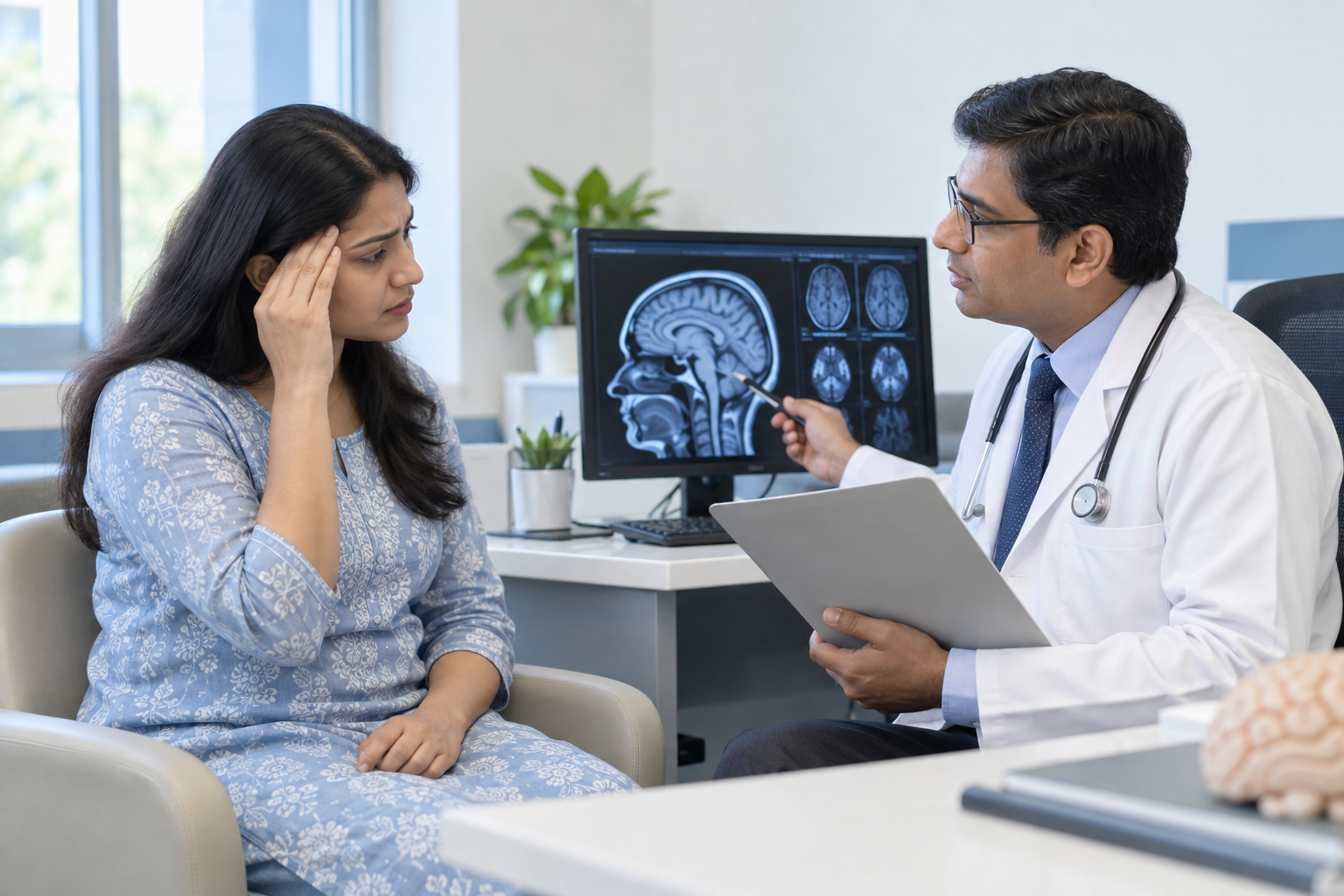
The doctor may ask when the headaches began, how often they occur, where the pain is located, how long episodes last, associated symptoms, medicines being used and whether there are identifiable triggers. A neurological examination helps determine whether the headache pattern is consistent with a primary headache disorder or needs additional investigation.
Depending on the clinical findings, diagnostic tests or imaging may be advised. Not every patient with headache requires the same tests, so investigations should be selected according to the individual situation.
Why Frequent Self-Medication Can Be a Problem
Repeated use of pain-relief medicines without medical guidance can sometimes complicate headache management. It may temporarily suppress symptoms without addressing the headache pattern or underlying condition. Patients should tell their doctor how often they use pain medicines, including over-the-counter products.
Do not start preventive migraine medicines or change prescription treatment without medical advice.
Managing Migraine and Recurrent Headache
Treatment depends on headache type, attack frequency, severity, associated symptoms and the patient’s overall health. A doctor may recommend medicines for individual attacks, preventive treatment for selected patients and changes in daily habits.
General measures that may support headache management include:
- Maintain a regular sleep schedule
- Avoid routinely skipping meals
- Stay adequately hydrated
- Track headache frequency, duration and possible triggers
- Take prescribed medicines according to medical advice
- Limit known personal triggers where practical
- Attend follow-up when headaches remain frequent or treatment is not working
Neurology and Neuroscience Care at Himalaya Hospital, Patna
Neurology and Neuroscience are among the service areas identified for Himalaya Hospital. Its multi-specialty environment provides access to diagnostic and emergency support when a neurological complaint requires further evaluation or urgent care.
This coordinated approach can be useful for patients whose headaches occur alongside other neurological or medical symptoms.
Book a Neurology Consultation in Patna
If migraine or severe headaches are recurring, changing in pattern or interfering with daily life, consult a qualified neurologist for proper assessment. Himalaya Hospital, Patna provides Neurology and Neuroscience care along with multi-specialty, diagnostic and emergency support.
Call Himalaya Hospital for appointment support: 9031040321, 9031040322, 9031040323, 9031040324
Address: 70 Feet, IOC Main Rd, Mahavir Nagar, Sipara, Patna, Bihar 800002
This article is for general information only and does not replace medical advice, diagnosis or treatment from a qualified healthcare professional.