- Overview
- What Is Laparoscopic Surgery?
- Common Benefits of Minimally Invasive Surgery
- When Can Laparoscopic Surgery Be Considered?
- How Doctors Decide the Right Surgical Approach
- Surgical Care at Himalaya Hospital, Patna
- Preparing for Laparoscopic Surgery
- Recovery After Surgery
- Why Choose Himalaya Hospital for Surgical Care in Patna?
- Book a Surgical Consultation
Laparoscopic Surgery in Patna – Himalaya Hospital
Surgery does not always require a large incision or a long recovery period. Modern laparoscopic surgery uses small incisions and specialized instruments to help surgeons perform selected procedures with greater precision and less tissue disruption. At Himalaya Hospital, Patna, patients have access to multi-specialty surgical care supported by experienced doctors, operation theatre facilities, diagnostics, critical care, and round-the-clock emergency support.
What Is Laparoscopic Surgery?
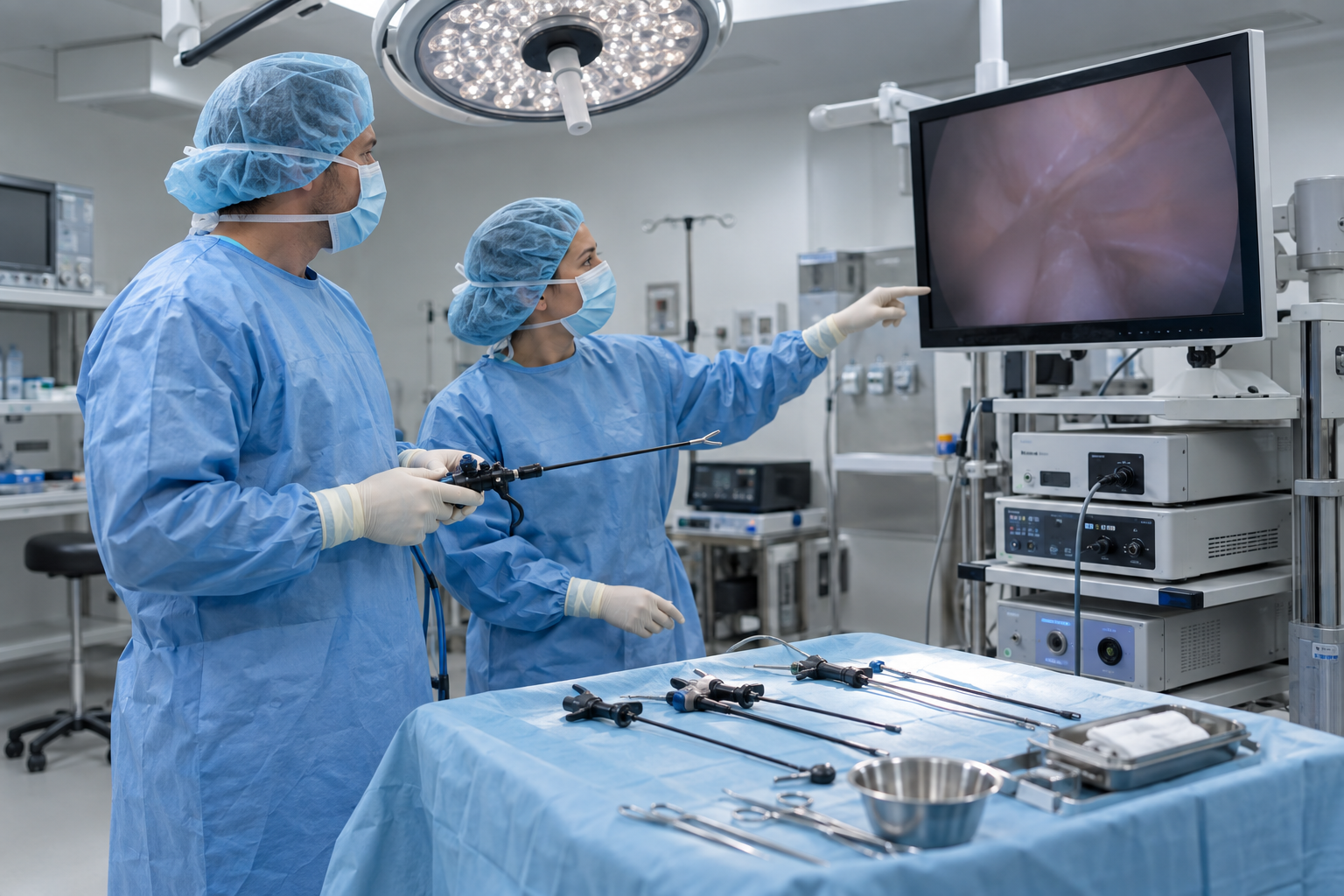
Laparoscopic surgery, often called minimally invasive or keyhole surgery, is a technique in which a surgeon operates through a few small incisions instead of one large surgical cut. A thin camera called a laparoscope provides a magnified view of the internal organs, while specialized instruments are used to perform the procedure.
Whether laparoscopy is suitable depends on the patient’s diagnosis, medical condition, previous surgeries, urgency, and the type of procedure required. A surgeon should evaluate these factors before recommending the most appropriate treatment approach.
Common Benefits of Minimally Invasive Surgery
For appropriately selected patients, laparoscopic surgery may offer several advantages:
- Smaller Incisions – Smaller surgical cuts may result in less visible scarring.
- Reduced Post-Operative Discomfort – Many patients experience less wound-related pain than with a large open incision.
- Shorter Hospital Stay – Depending on the procedure and recovery, discharge may be possible sooner.
- Faster Return to Routine – Smaller incisions can support earlier mobility and recovery in suitable cases.
- Lower Wound Complications – Smaller wounds may reduce some incision-related problems, although every surgery carries risks.
When Can Laparoscopic Surgery Be Considered?
Laparoscopic techniques are used across several surgical specialties. Depending on the diagnosis and the surgeon’s assessment, minimally invasive surgery may be considered for selected abdominal and general surgical conditions. Some gynecological and urological procedures can also be performed with minimally invasive techniques.
Not every condition should be treated laparoscopically. In emergencies, complex disease, extensive previous surgery, or situations where patient safety requires wider access, open surgery may be the better option. The final decision should always be individualized.
How Doctors Decide the Right Surgical Approach
Before surgery, the medical team may review:
- Your symptoms, diagnosis, and severity of the condition
- Blood tests, ultrasound, X-ray, CT scan, or other investigations when clinically required
- Age, medical history, current medicines, and existing health conditions
- Previous abdominal or pelvic surgeries
- Anaesthesia fitness and overall surgical risk
- Expected benefits and possible risks of laparoscopic versus open surgery
Surgical Care at Himalaya Hospital, Patna
Himalaya Hospital is a 105-bed multi-specialty hospital with more than 25 medical and surgical disciplines. Its website lists general surgery and advanced laparoscopic surgical expertise, along with modern operation theatres, diagnostic services, ICU/HDU support, and 24×7 emergency care. This integrated setup helps patients move from consultation and investigation to surgery and post-operative monitoring within a coordinated hospital environment.
Preparing for Laparoscopic Surgery
Preparation varies by procedure. Your surgeon and anaesthesia team may provide instructions about fasting, medicines, investigations, admission timing, and post-operative care. Carry previous medical reports and a complete list of medicines and allergies. Do not stop blood thinners, diabetes medicines, or other prescribed drugs unless your treating doctor specifically advises you to do so.
Recovery After Surgery
Recovery time depends on the procedure, the patient’s overall health, and whether any complications occur. Patients are usually encouraged to follow wound-care instructions, take medicines as prescribed, resume activity gradually, and attend scheduled follow-up visits. Seek urgent medical attention for severe or increasing pain, persistent vomiting, breathing difficulty, heavy bleeding, high fever, worsening abdominal swelling, or any symptom your surgeon has identified as a warning sign.
Why Choose Himalaya Hospital for Surgical Care in Patna?
- Multi-Specialty Support – Medical and surgical specialties are available within one hospital.
- Advanced Laparoscopic Expertise – The hospital’s doctor listing includes advanced laparoscopic surgical care.
- Diagnostics & Imaging – Hospital-based diagnostic support helps with evaluation and treatment planning.
- ICU & Critical Care Support – Monitoring and critical care are available for patients who need higher-level support.
- 24×7 Emergency Services – Emergency care is available round the clock for urgent medical and surgical needs.
Book a Surgical Consultation
If you have been advised to undergo surgery or want to know whether a minimally invasive approach may be suitable for your condition, consult the surgical team at Himalaya Hospital, Patna. A proper clinical evaluation can help determine the safest and most appropriate treatment plan for you.
Call Himalaya Hospital for consultation and appointment support: 9031040321, 9031040322, 9031040323, 9031040324
Address: 70 Feet, IOC Main Rd, Mahavir Nagar, Sipara, Patna, Bihar 800002
This article is for general information only and does not replace medical advice, diagnosis, or treatment from a qualified doctor.