- Overview
- What Does a Cardiologist Evaluate?
- Heart-Related Symptoms That Should Not Be Ignored
- When Chest Pain May Be an Emergency
- Who Should Pay Extra Attention to Heart Health?
- How Heart Symptoms Are Evaluated
- Heart Health and Lifestyle
- Do Not Self-Diagnose Chest Pain
- Multi-Specialty and Emergency Support at Himalaya Hospital
- Book a Medical Consultation in Patna
Chest Pain and Heart Problems in Patna – When to See a Cardiologist | Himalaya Hospital
Chest pain, unusual breathlessness, palpitations or unexplained weakness can be worrying symptoms. While not every episode of chest discomfort is caused by the heart, some heart-related conditions require rapid medical assessment. Knowing which symptoms need routine evaluation and which require emergency care can help patients seek timely treatment. Himalaya Hospital, Patna provides multi-specialty hospital support, diagnostics, critical care and 24×7 emergency services for patients who need medical evaluation.
What Does a Cardiologist Evaluate?
A cardiologist evaluates conditions affecting the heart and blood vessels. Patients may need cardiac assessment because of chest discomfort, shortness of breath, abnormal heartbeat, high blood pressure, swelling, reduced exercise tolerance, abnormal ECG findings or known heart disease.
Chest symptoms can also arise from the lungs, digestive system, muscles or other causes. A medical examination is important because symptoms alone cannot reliably determine whether the heart is involved.
Heart-Related Symptoms That Should Not Be Ignored
Arrange medical evaluation if you repeatedly experience:
- Chest pressure, tightness, heaviness or discomfort
- Shortness of breath during routine activity or while resting
- Palpitations, racing heartbeat or an irregular heartbeat sensation
- Unexplained dizziness, weakness or near-fainting episodes
- Swelling in the feet or ankles
- Unusual tiredness or reduced ability to exercise
- Persistent high blood pressure or abnormal cardiac test results
- Recurring symptoms in a person with diabetes, hypertension or known heart disease
When Chest Pain May Be an Emergency
Some symptoms require immediate emergency attention. Seek urgent care for sudden or severe chest pressure or pain, especially when it is accompanied by breathlessness, sweating, nausea, fainting, severe weakness, or pain spreading toward the arm, shoulder, back, neck or jaw.
Do not delay emergency evaluation simply because symptoms improve temporarily. The safest approach is to seek prompt medical attention when symptoms are severe, new or concerning.
Who Should Pay Extra Attention to Heart Health?
The likelihood of cardiovascular disease can be influenced by factors such as increasing age, high blood pressure, diabetes, abnormal cholesterol, tobacco use, obesity, physical inactivity and family history. People with multiple risk factors may benefit from regular medical review even before major symptoms appear.
Risk is individual, so screening tests and follow-up schedules should be decided with a qualified doctor rather than through self-testing alone.
How Heart Symptoms Are Evaluated
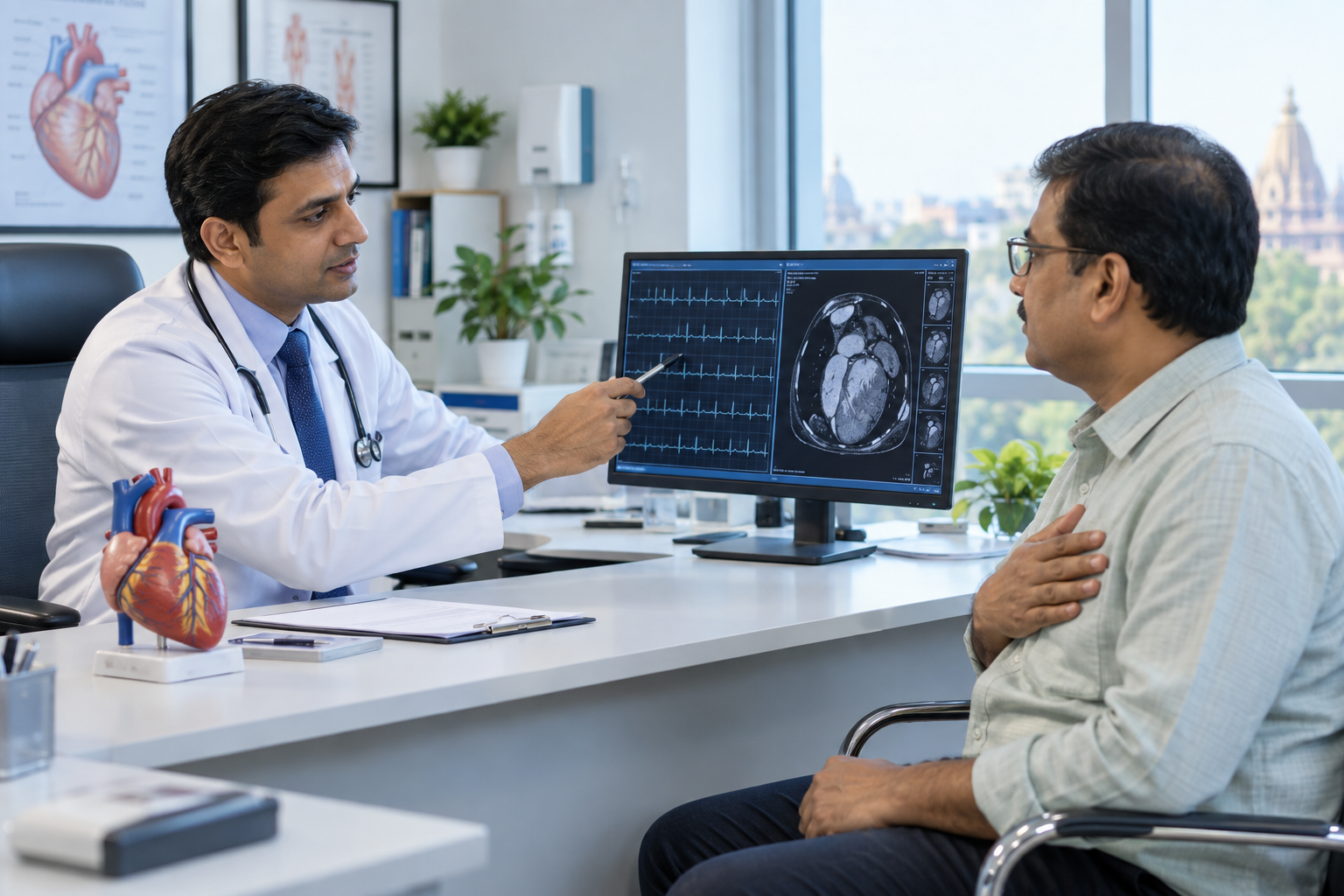
A doctor will usually begin with the patient’s symptoms, medical history, medicines and risk factors, followed by a physical examination. Depending on the clinical situation, tests such as blood pressure measurement, ECG, blood investigations, cardiac imaging or other investigations may be recommended.
The exact tests vary from patient to patient. Previous ECGs, prescriptions, laboratory reports and details of existing conditions such as diabetes or hypertension should be carried to the consultation when available.
Heart Health and Lifestyle
Medical treatment is only one part of cardiovascular care. General heart-healthy habits may include:
- Avoid tobacco and smoking
- Keep blood pressure, diabetes and cholesterol under medical supervision
- Choose a balanced diet and avoid excessive salt, sugar and highly processed foods
- Maintain regular physical activity appropriate for your health and doctor’s advice
- Take prescribed medicines consistently
- Attend follow-up appointments and recommended tests
- Seek medical advice if new symptoms develop or existing symptoms worsen
Do Not Self-Diagnose Chest Pain
Heartburn, muscle strain and anxiety can sometimes cause chest discomfort, but it is unsafe to assume that chest pain is harmless without evaluation when warning signs are present. Similarly, normal-looking symptoms do not always exclude heart disease. Clinical assessment helps determine whether emergency treatment, further testing or routine follow-up is appropriate.
Multi-Specialty and Emergency Support at Himalaya Hospital
Himalaya Hospital, Patna is a 105-bed multi-specialty hospital with more than 25 medical and surgical disciplines. Its hospital infrastructure includes diagnostic services, ICU/HDU support and round-the-clock emergency care. This coordinated setup is useful when chest pain or breathlessness requires assessment across cardiac, respiratory, medical or critical-care teams.
Patients with urgent symptoms should use emergency services rather than waiting for a routine outpatient appointment.
Book a Medical Consultation in Patna
If you have recurring chest discomfort, palpitations, breathlessness, persistent high blood pressure or other symptoms that may require heart evaluation, consult a qualified medical professional. Himalaya Hospital, Patna offers multi-specialty, diagnostic, emergency and critical-care support for patients who need coordinated assessment.
Call Himalaya Hospital for appointment support: 9031040321, 9031040322, 9031040323, 9031040324
Address: 70 Feet, IOC Main Rd, Mahavir Nagar, Sipara, Patna, Bihar 800002
This article is for general information only and does not replace medical advice, diagnosis or emergency treatment from a qualified healthcare professional.